


Frequently Asked Questions during the Admission Season
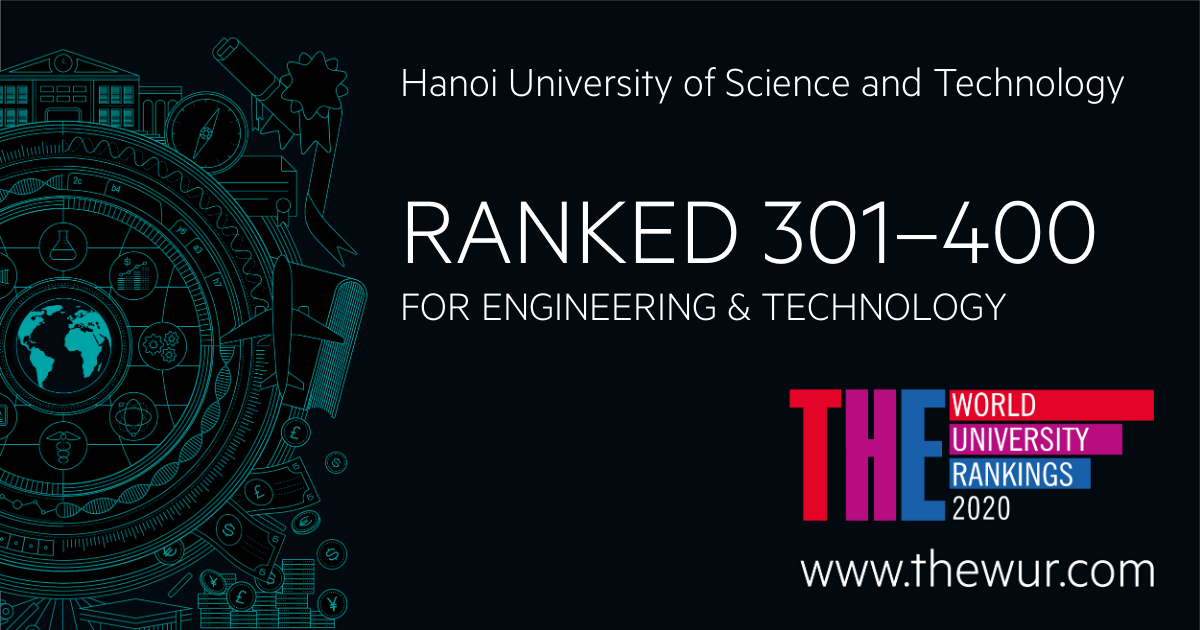
Hanoi University of Science and Technology is Vietnam’s leading technical university. According to the latest announcement by Times Higher Education (THE), HUST has just been ranked 301–400 in the field of Engineering & Technology. With this ranking, HUST stands 4th in Southeast Asia and 1st in Vietnam.
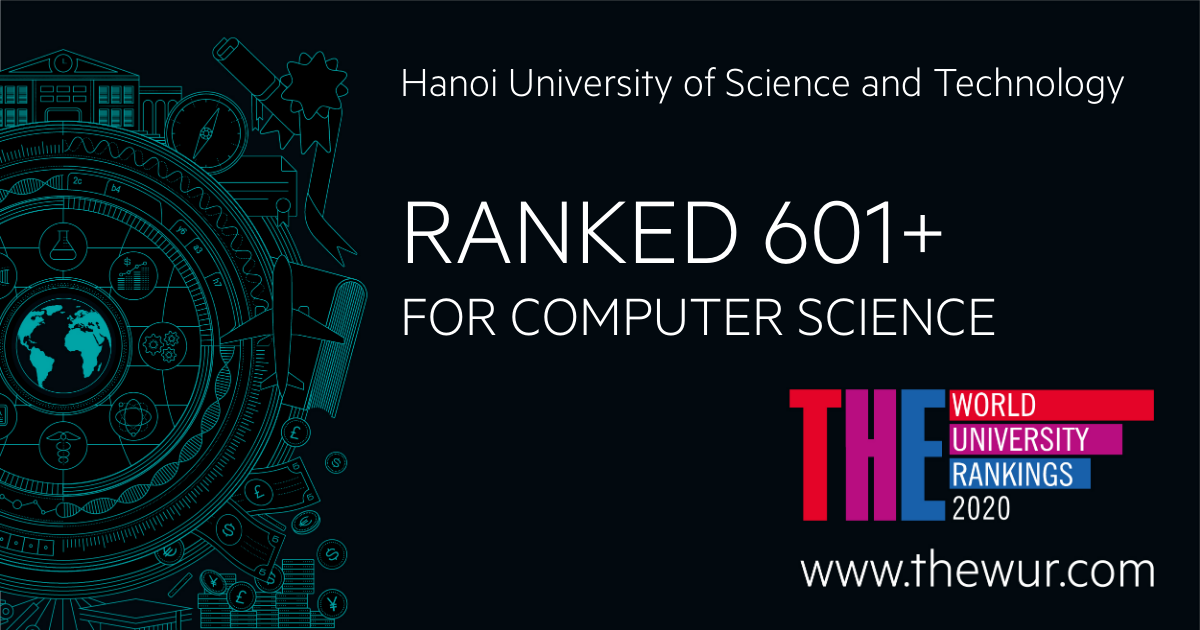
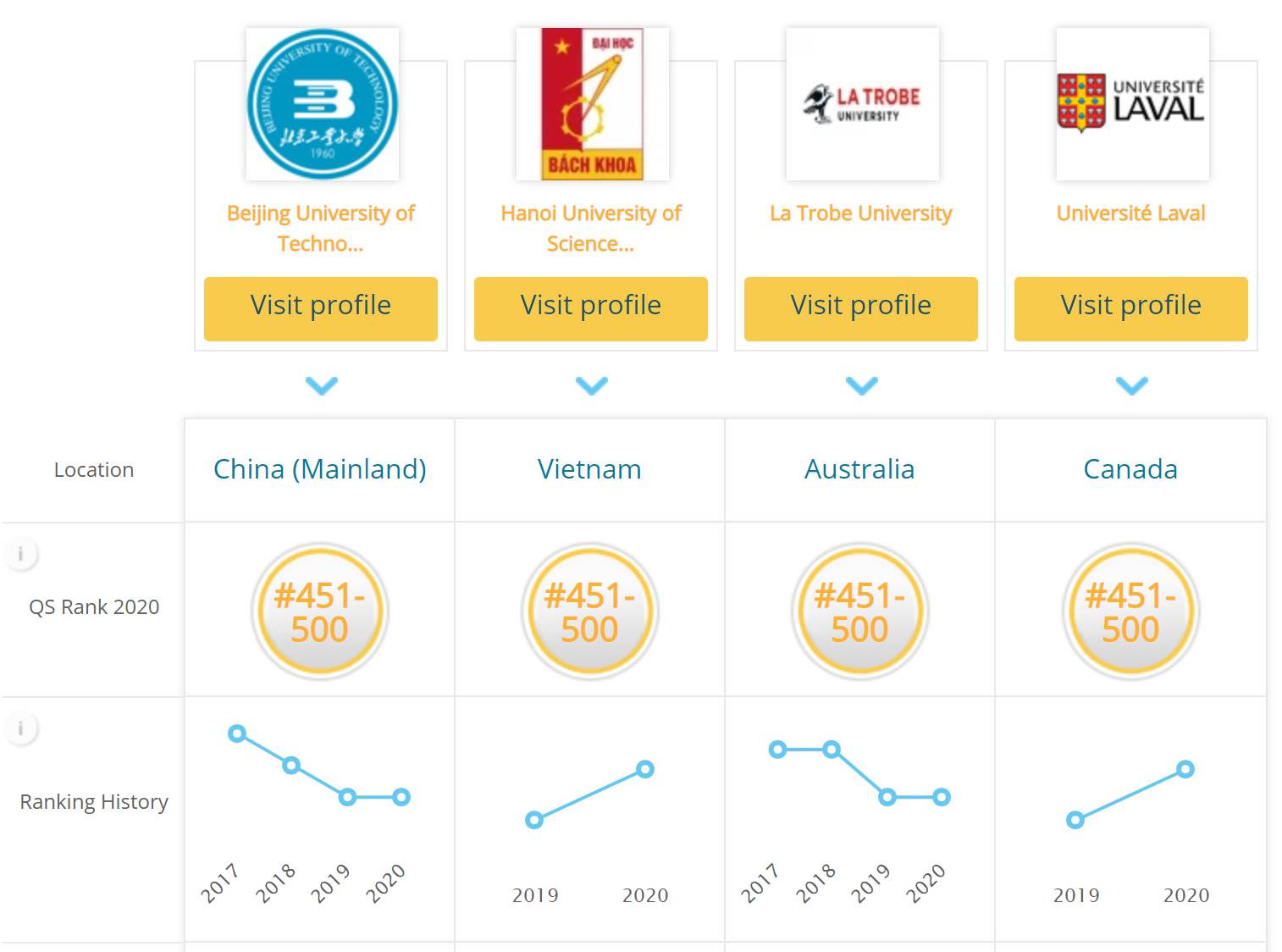
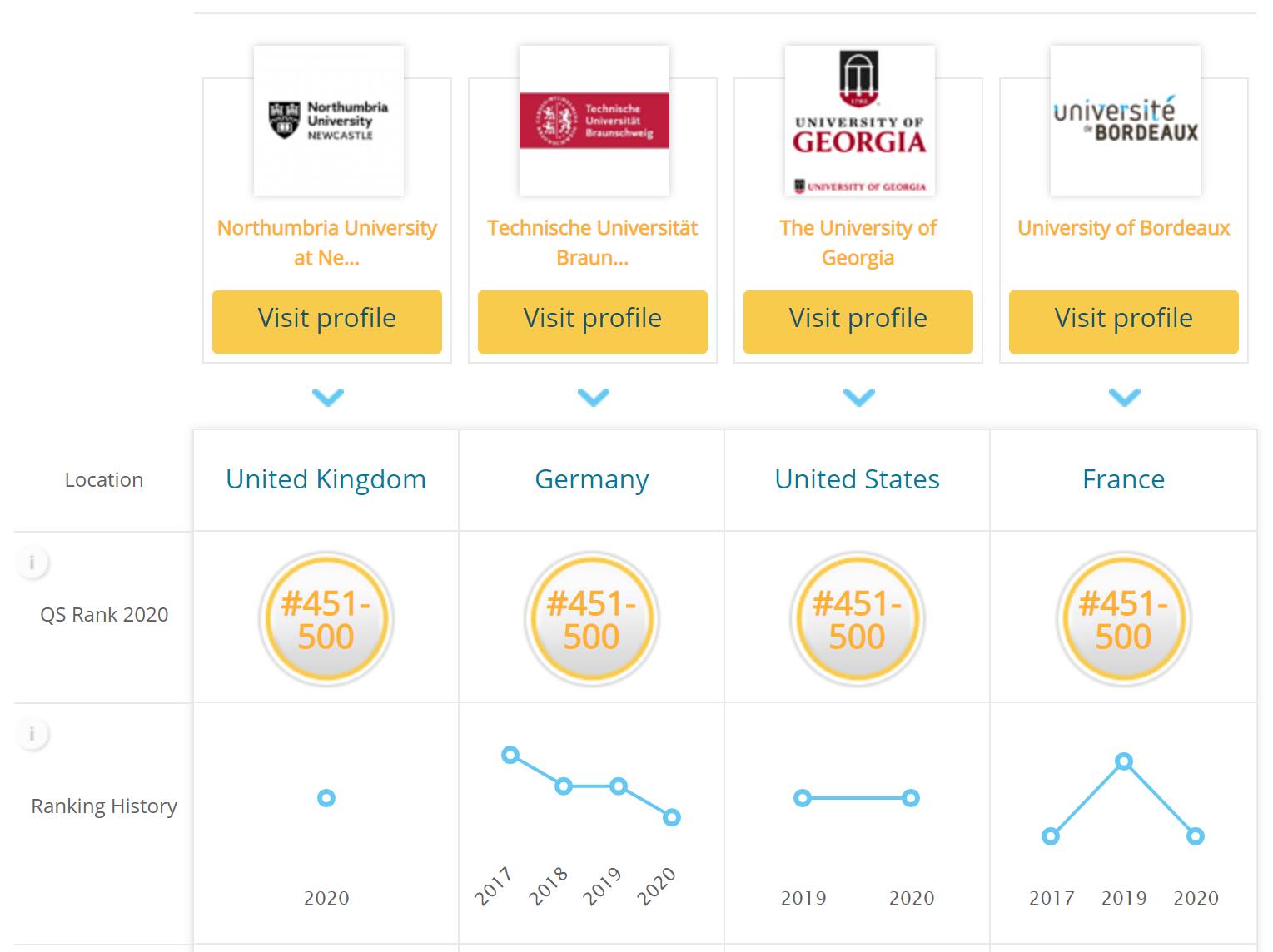
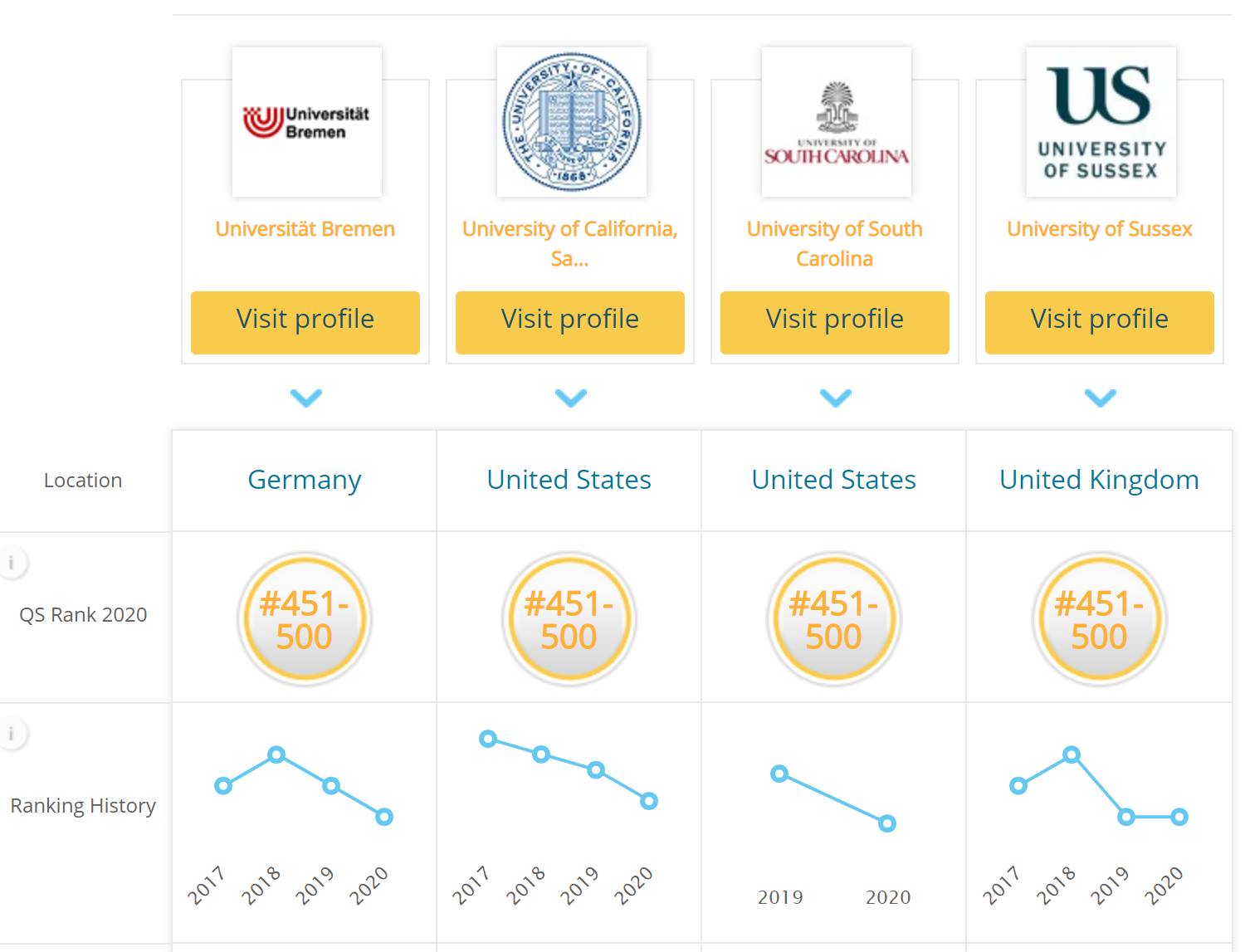
Specifically in the field of Information Technology, also according to THE, HUST is ranked 601+ in Computer Science in the THE World University Rankings by Subject 2020 (THE WUR by Subject 2020). In addition, in another prestigious ranking by field from Quacquarelli Symonds (United Kingdom) (QS ranking by subject 2022), HUST’s Computer Science and Information Systems field is ranked in the Top 401-450 worldwide.
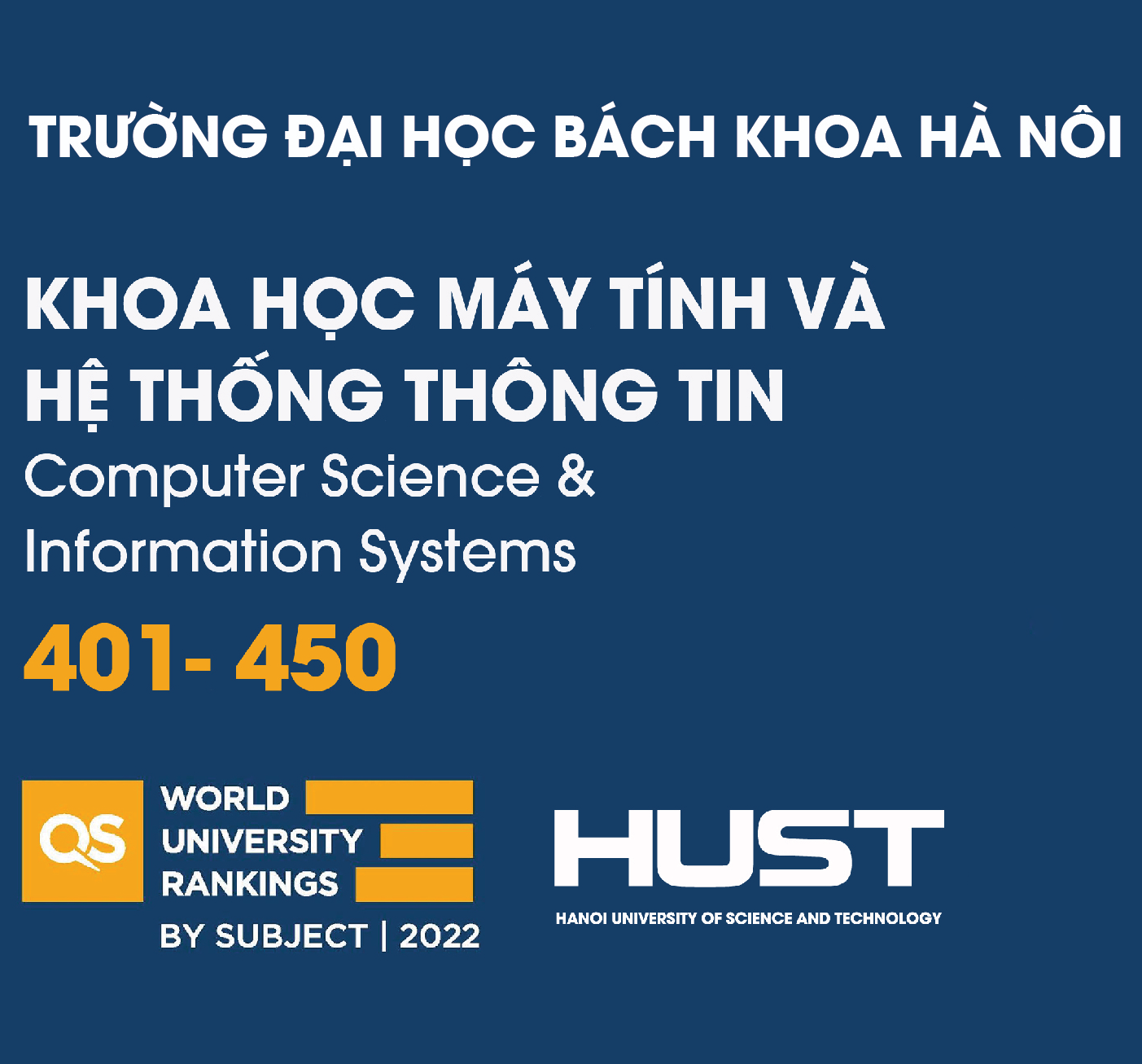
In both the prestigious THE and QS rankings, HUST ranks first in Vietnam in the field of Computer Science (or IT, as it is commonly defined here), standing alongside a number of reputable universities in developed countries.
In addition, prospective students who are interested can learn more about the School through the information available on this website:
- A training major is a broad field of expertise with a code in the Level IV Classification of Education and Training managed by the Ministry of Education and Training. Under the Law amending and supplementing a number of articles of the Law on Higher Education, universities are autonomous in opening new majors if they meet the required conditions.
- A training program is the design for the entire training process of one major (a single-major program) or several majors (a double-major or double-degree program). A program clearly specifies the training level; the target learners, admission requirements and graduation requirements; the training objectives and the knowledge/skill standards expected of graduates; the content (curriculum); the training schedule; the teaching methods and formats; the assessment methods; and the conditions for implementing the program. For each training program, each school assigns its own admission code.
- For example, the School of Information and Communication Technology currently manages 5 training majors:
- The Computer Science major has the Ministry of Education and Training’s official major code: 7480101. At HUST, the Computer Science major is delivered through the Computer Science program with the School’s admission code IT1.
- The Computer Engineering major, major code 7480108; at HUST this major is delivered through the Computer Engineering program with the School’s admission code IT2.
- The Information Technology major, major code 7480201. At HUST, this major is delivered through the following programs:
- The Information Technology program, admission code IT3: has stopped admissions since 2019;
- The Elitech Vietnam–Japan Information Technology program (HEDSPI, admission code IT-E6).
- The Elitech Global Information and Communication Technology program (Global ICT, admission code IT-E7).
- The Elitech Vietnam–France Information Technology program (admission code IT-EP).
- The Data Science major: HUST is the first school to offer this major, having been granted code 7480109 by the Ministry of Education and Training, together with the Elitech Data Science and Artificial Intelligence program (DS-AI, admission code IT-E10).
- The Information Security major, major code 7480202, together with the Elitech Cyber Security program (admission code IT-E15).
Since 2019, HUST has decided to stop admissions for the IT3 – Information Technology program. This does not mean that HUST no longer trains students in the field of Information Technology; rather, it is a step to:
- Standardize the naming of majors/programs in line with international practice, so that names correctly reflect content that is understood consistently around the world; and
- Enable students to choose their specialized field from the very beginning, and after graduation to reduce difficulties when converting equivalent degrees, making it easier to enter the international labor market or to transfer to graduate programs abroad.
HUST still does, and always will, train students in the field of Information Technology (IT); however, this year the University reorganized its majors (and consequently its programs) to align with international practice and actual training realities. The way “IT” is understood in Vietnam differs from the rest of the world, so opening IT–Computer Science (IT1), IT–Computer Engineering (IT2), and IT–Data Science (IT-E10) is an appropriate standardization step in line with international practice, even though the “IT” prefix is always kept so that learners in Vietnam still understand that these are majors within the broad field of IT; in other words — as commonly understood here — IT is the broad field, within which there are 3 smaller majors as above. This division into majors also helps students orient their careers from the outset, go deeper into their specialization, and become experts in their respective fields.
In fact, not many leading universities in the world train students in an “Information Technology” major the way we do here; instead, they typically offer a Computer Science major. For them, everything related to computers — discrete mathematics, algorithms, data structures, programming, databases, software engineering, natural language processing, artificial intelligence, etc. — falls under Computer Science. Students of this major become capable of handling every stage of developing software, a program, or an information system that addresses problems arising in daily life. Information Technology (IT), on the other hand, is a more technician-oriented profession, for example: installing, operating, and administering computer systems, network systems, and database systems. So, in a sense equivalent to how it’s understood here, studying to build software means studying Computer Science (the IT1 program).
- IT1: specializes in software engineering, information systems, etc.
- IT2: specializes in embedded systems and IoT, computer networks, information security, etc.
- IT-E10: specializes in data science and artificial intelligence.
- Alignment with international practice, easier equivalent-degree conversion, and easier transfer to further study abroad;
- Students can orient themselves toward the field they will pursue in their career from the very start.
The reputation of HUST’s IT engineers/master’s graduates is currently very high among employers both domestically and internationally, thanks to a strong foundation of knowledge, diligence, intelligence, creativity, and especially the ability to adapt to the increasingly demanding requirements of the job. It is easy to see that, at virtually every IT enterprise today, HUST IT engineers hold key positions and enjoy a strong professional reputation. Because the supply of high-quality talent in the IT field from schools like HUST is always in short supply, across every major within the broad IT field, prospective students should not put pressure on themselves over choosing a major; this choice should simply come from one’s strengths, passion, and general interest, and has almost no impact on career prospects after graduation.
Because career guidance at the high-school level is not yet very good, students often ask: which major/program should I study to learn programming? Or which major should I choose if I want to build websites or games? The general answer is that every major/program at the School requires thorough study of programming, programming techniques, programming languages, and more besides. The output of programming is software, whether that software runs on a server, a computer, a phone, or an embedded system. Websites and games are also software, and no matter which major you study, you will be capable of creating that software, and more besides.
Below, let’s go over some of the basic differences between the majors:
- Computer Science (IT1), put simply (so that high-school students can easily grasp it), relates to PROGRAMMING applications that run on SERVERS and COMPUTERS (PCs, laptops, and smart personal devices), using knowledge of software engineering and information systems in general. Computer Science is the most fundamental major in the IT-related fields, and most prestigious universities in the world offer this major. By studying IT1, students gain full knowledge of software development; building and administering databases; developing integrated solutions to provide information systems suited to user needs; developing and optimizing computing algorithms; parallel- and distributed-computing methods and systems; big-data processing; data-analysis techniques and methods; artificial intelligence; machine learning, and more.
- Computer Engineering (IT2) is PROGRAMMING on DEVICES (with processors of limited computing power, limited memory, and limited power/battery — commonly referred to as embedded systems), for example: programming on smart cameras, robots, or phones. In addition, IT2 also teaches knowledge of computer networks and data transmission (how to transmit data efficiently between machines), and especially information security (security, defense against cyberattacks, etc.), as well as important knowledge of signal processing, digital electronics, interfacing, etc., so that students can, if needed, work deeper at the device level — even though hardware manufacturers today already meet most diverse needs, and in most solutions the differentiator is the software running on the device, which is the goal of IT2.
- Data Science and Artificial Intelligence (IT-E10): is a specialized, focused training program in a field that is currently very hot and in high demand in society, aimed at training highly qualified experts in data science and artificial intelligence (DS-AI scientists). Unlike IT1, which trains students broadly in Computer Science, IT-E10 is oriented toward in-depth training in the DS-AI field. From the very first year, IT-E10 students are equipped with mathematics knowledge specific to the field, such as probability and statistics; then, in the specialization phase, students focus on core areas of the field such as AI, machine learning, deep learning, pattern-recognition methods/techniques, natural language processing, computer vision, big-data processing, etc., as well as foundational knowledge in some important application areas such as Business Analytics (BA) and Business Intelligence (BI). After graduation, IT-E10 students can become experts who develop data-analysis and AI systems and tools, as well as experts who apply these technologies in various fields (e.g., finance, banking, securities, etc.).
An example connecting everything into one solution: an urban bus monitoring and operation system. IT2 students would write the software running on the on-board monitoring device to obtain location from the GPS chip and images from the camera and send them to the server. IT1 students would write the vehicle-management software, displayed as a web application, for the operator to plan bus schedules for drivers. IT-E10 students would gather traffic data, analyze passenger demand, and use AI techniques to devise an automatic, optimal vehicle-dispatch plan, e.g., depending on sunny/rainy weather, holidays, or peak days, which routes should be prioritized to best meet passenger demand.
Besides the 3 programs belonging to the 3 core majors of the general Information Technology field (Computer Science, Computer Engineering, Data Science), the School currently also offers 3 advanced programs under the Elitech training track, aimed at maximizing learners’ potential and preparing them for the international labor market. These programs are designed to modern standards and are taught wholly or partly in English, French, and Japanese (the IT-E10 program mentioned above also belongs to Elitech):
- The Elitech Vietnam – Japan Information Technology program (HEDSPI, admission code: IT-E6).
- The Elitech Global Information and Communication Technology program (Global ICT, admission code: IT-E7).
- The Elitech Vietnam – France Information Technology program (admission code: IT-EP).
These three programs have almost identical content and differ mainly in the language of instruction or language enhancement. These programs branch learners toward Computer Science or Computer Engineering orientations during their studies. In addition to strong professional skills, students in these programs also gain foreign-language proficiency sufficient to work in Japan (IT-E6), or in Europe, North America, and other countries in the region (IT-E7, IT-E10, IT-E15, IT-EP).
In 2021, in order to meet the demand for experts in extremely hot fields — information security, cybersecurity, defense against cyberattacks, cryptography, etc. — HUST decided to open:
- The Elitech Cyber Security program (admission code: IT-E15).
This program differs from existing information-security training programs across the country in that its target output is “practice-ready” experts — strong in theory but also highly skilled in practice. As a result, many courses are taught by leading cybersecurity technology experts and involve hands-on practice on the advanced simulation and drill systems of corporations and companies such as BKAV, IBM, and others.
Because career guidance at the high-school level is not yet very good, students often ask: which major/program should I study to learn programming? Or which major should I choose if I want to build websites or games? The general answer is that every major/program at the School requires thorough study of programming, programming techniques, programming languages, and… more besides. The output of programming is software, whether that software is deployed on a server, a computer, a phone, or an embedded system. Websites and games are also software, and no matter which major you study, you will be capable of creating that software, and… more besides.
- The standard programs (IT1, IT2) are traditional programs with a long track record at HUST. These programs are regularly updated to keep up with developments in the field. The standard programs offer good quality at a reasonable tuition fee.
- The advanced Elitech programs (IT-E6, IT-E7, IT-E10, IT-E15, IT-EP, IT-E15) are designed to maximize learners’ potential, preparing them for the international labor market or for graduate study abroad. These programs are designed to modern standards and are taught wholly or partly in English, French, and Japanese.
The School’s standard programs are traditional programs that have existed for many years and are continually updated in line with technological developments. The School has 2 standard programs: Computer Science (IT1) and Computer Engineering (IT2)
The advantages of choosing a standard program include:
- Good quality at a reasonable tuition fee.
- A solid foundational education, with many specialization tracks available in the final year. For IT1: Information Systems, Software Engineering, Intelligent Data Analytics. For IT2: Embedded Systems and IoT, Computer Networks and Data Communications.
Some disadvantages of the standard programs include:
- Large class sizes;
- Students face less pressure to learn a foreign language, so many graduate without strong foreign-language skills, which can affect their choice of work environment.
Regarding the Elitech programs, these are advanced tracks, meaning modern training programs taught in a foreign language or with enhanced foreign-language instruction. The School’s Elitech programs taught entirely in English are: Global ICT (IT-E7), Data Science and Artificial Intelligence (IT-E10), and Cyber Security (IT-E15). The School’s foreign-language-enhanced programs include Vietnam–Japan IT (IT-E6) with enhanced Japanese, and Vietnam–France IT (IT-EP) with enhanced French.
This group of programs orients graduates toward working in international labor markets, including working in Vietnam within international environments (foreign enterprises, or the international divisions of Vietnamese enterprises).
The Elitech programs are divided into 2 main groups:
- The IT programs (IT-E6, IT-E7, IT-EP): within this group the programs are essentially identical, differing only in language — English, French, or Japanese;
- The specialized programs: focused on new and hot specialty areas, such as IT-E10 and IT-E15.
Advantages of the Elitech programs:
- Smaller classes, more hands-on practice, better basic facilities;
- Dynamic students with strong soft skills and good long-term development potential;
- More opportunities for international exchange (hosting European exchange students, or going on exchange abroad);
- Access to foreign lecturers.
The Elitech programs have some disadvantages:
- To enable the advantages listed above, the tuition fees of these programs are higher than those of the standard programs.
- Sometimes, the Elitech programs are mistakenly confused with low-admission-score, high-tuition “linkage” programs at other institutions. In fact, since 2023, IT-E10 has become the program with the highest admission score!
In recent years, Elitech students have proven, proportionally, to perform better during their graduation projects and, after graduating, earn higher starting salaries than students from the standard programs (thanks to better foreign-language skills, stronger soft skills, and greater confidence). Many, after graduating, have received prestigious scholarships to study abroad or gone directly abroad to work! So, if tuition is affordable for the student and their family, choosing an Elitech program is well worth considering.
Data science and artificial intelligence in general are spreading into many fields amid the Fourth Industrial Revolution, or the digital transformation process taking place strongly worldwide. Across all of the training programs at the School of Information and Communication Technology, basic knowledge of data science and AI is provided to every learner.
All programs include tracks in intelligent data processing and AI combined with deep specializations such as AIoT (AI combined with IoT), and AI combined with Cyber Security, etc.
However, the Elitech Data Science and Artificial Intelligence program (IT-E10) is the program specialized in this field. From the very first year, IT-E10 students are equipped with mathematics knowledge specific to the field, such as probability and statistics; then, in the specialization phase, students focus on core areas of the field such as AI, machine learning, deep learning, pattern-recognition methods/techniques, natural language processing, computer vision, big-data processing, etc., as well as foundational knowledge in some important application areas such as Business Analytics (BA) and Business Intelligence (BI).
Students in other programs who want to develop deep expertise in this field can pursue a Master’s in Data Science and Artificial Intelligence (1.5 years) after completing their bachelor’s degree.
Training programs at HUST are being designed along the following orientation:
- After 4 years: students may graduate with a bachelor’s degree, and then have the option to continue studying
- With two options:
- Engineer’s degree, or
- Master’s degree.
The bachelor’s degree is designed around a broad major, providing learners with foundational and core knowledge; it emphasizes creative research activities, positive attitudes toward society and the environment in professional practice, and adaptability in international work environments. After graduating with a bachelor’s degree, students can be ready to enter the labor market. However, for those who wish to become experts with the ability to conduct research, development, and application at a high level, they should pursue further study at the postgraduate level.
Postgraduate programs (Engineer’s, Master’s) emphasize advanced professional knowledge, scientific working skills and methods, systems thinking and independent analytical thinking, and creativity and self-directed learning in a dynamic, integrated, and constantly evolving work environment. Specifically:
- The Engineer’s-degree program is designed with the orientation that, after graduation, engineers will work in research and development (R&D) at enterprises and corporations. That is, engineers need deep expertise tied to market-oriented product development, so the program allocates a substantial proportion of time to hands-on practice and internships at enterprises.
- The Master of Science program is designed with the orientation that, after graduation, master’s graduates will engage in scientific research, becoming experts and scientists with deep expertise who wish to pursue creative research, including continuing on to a PhD, whether domestically or abroad. The program allocates significant time to internships and research at the School’s research laboratories as well as those of domestic and international partners.
Note: the decision on a career/professional direction depends mainly on the learner’s own ability, so the division above is only relative — Engineer’s-degree graduates can still, if they wish, continue on to a PhD, and Master’s graduates are also well-suited to working at the R&D centers/departments of corporations and enterprises.
The integrated Bachelor’s – Master’s / Engineer’s program is a curriculum framework designed to be integrated and continuous between the bachelor’s level and the master’s/engineer’s level, with knowledge blocks and teaching time designed to be most convenient for learners in terms of study duration. While studying at the bachelor’s level, students can take courses belonging to the master’s/engineer’s level without needing to hold a bachelor’s degree first in order to register for those courses. The integrated program awards 2 degrees upon graduation: a Bachelor’s degree; and a Master’s or Engineer’s degree.
Note: According to “Government Decree No. 99/2019/ND-CP: detailing and guiding the implementation of a number of articles of the Law amending and supplementing a number of articles of the Law on Higher Education,” the Engineer’s and Master’s degrees are postgraduate levels, both equivalent to Level 7 under the National Qualifications Framework.
As mentioned above, the Elitech programs are aimed at supplying talent for the international labor market, so foreign-language elements — English, French, and Japanese — are given importance alongside the modern, up-to-date professional knowledge required.
The IT-E6, IT-E7, and IT-E10 programs, which belong to the Information Technology major, are designed similarly to one another, and the main difference comes from the language factor, as well as the invitation of foreign lecturers/experts from countries with the corresponding language to teach students.
The Vietnam–Japan Information Technology program allows students who do not yet know Japanese to start learning Japanese from scratch. Core professional courses are taught in Vietnamese, so learners do not need to know Japanese before enrolling.
Students who already know Japanese may, depending on their proficiency level, be exempted from certain Japanese-language courses (as assessed by the Japanese-language faculty).
For the Global ICT, DS-AI, and Cyber Security programs, all core professional courses are taught entirely in English. So, strong English skills will make it easier for students to absorb the material. If your English is not yet strong, you will take intensive English courses in the first year before moving into core professional courses in the second year.
The field of Information and Communication Technology does not discriminate by gender. There are many powerful, well-known figures in global ICT who are women, such as Sheryl Sandberg, CEO of Facebook, and Marissa Mayer, former CEO of Yahoo, among others.
There are many career positions in the ICT field well suited to women, such as web programming/design, software testing, database administration, software quality assurance, IT management, and IT bridge engineering.
Actual admissions data at the School in recent years shows that the number of female students studying at the School has been increasing year over year. Female students’ academic results are also often better than those of male students.
Reference information on tuition fees by major/training program of the University (including programs offered at the School) is published here.
In line with the School’s orientation, students in the Elitech and SIE tracks are taught in classes led by foreign professors/experts. At the School of Information and Communication Technology, this is always ensured — particularly in the Vietnam–Japan IT (IT-E6) program, where students learn Japanese directly from native Japanese speakers and attend courses taught in Japanese. In addition, this year the School recruited a Canadian professor (Michel Toulouse) to work full-time at the School teaching the Elitech tracks. Furthermore, through cooperation with and sponsorship from organizations, universities, and corporations (such as VinGroup), the School regularly invites and hosts reputable foreign scientists and experts to work and teach at the School.
The University’s scholarship policies: With the highest sense of responsibility toward society and learners, starting from the 2017–2018 academic year, HUST has implemented new scholarship policies to create opportunities for students from disadvantaged backgrounds to study at the University, as well as to encourage talented students to develop their personal abilities.
The University currently offers 4 types of scholarships, including:
- Talent scholarship: an award for undergraduate students with exceptionally outstanding academic achievement and good conduct results, worth 150% of tuition.
- Study-support scholarship: for undergraduate students from disadvantaged backgrounds who have good conduct results. There are two types: full scholarship and partial scholarship, where the partial scholarship equals 50% of the full scholarship.
- High-school students who meet one of the following conditions will be considered for a scholarship when enrolling at the School: (1) coming from a disadvantaged family economic background (poor/near-poor household, or a household in especially difficult circumstances); and (2) having a “good” conduct rating for 5 high-school semesters.
- Research scholarship: for graduate students (master’s) and PhD candidates who have publications in reputable international scientific journals (indexed in ISI or Scopus). There are two types: full scholarship and partial scholarship, worth 100% and 50% of tuition respectively. In addition, since 2019, students who graduate with a CPA above 3.2 receive a 100% exemption, and those with a CPA from 2.8 to under 3.2 receive 50% support on tuition when pursuing a master’s degree.
- Sponsored scholarship: scholarships granted by individuals, units, or enterprises with cooperative relationships with the University, for example: the Panasonic Scholarship, the Sumitomo Scholarship, the Lotte Scholarship, the Denso Scholarship, the Lawrence S. Ting Scholarship, and the Microsoft Scholarship for talented female students, among others.
Starting from 2019, the University’s fund for talent scholarships and study-support scholarships was worth 45 billion VND. Information on University-level scholarships is available on the homepage of the Department of Student Affairs: http://ctsv.hust.edu.vn/
Scholarship / financial-support policies from the School, or from the School’s partners:
- Teaching Assistant (TA) scholarships (supporting lecturers in teaching) and Research Assistant (RA) scholarships (supporting and collaborating on research with lecturers at the School’s laboratory system), for students with strong teaching and research ability (from third year onward), with compensation of up to 4 million VND/month, along with an official certificate from the School that later helps facilitate applications for scholarships to study abroad. The School is currently the only unit within the University offering these programs.
- Samsung corporation scholarships: 66 ~ 114 million VND cash per award. Information available here.
- The VinIF Fund scholarship from Vingroup: sponsoring outstanding master’s students and PhD candidates at 120 million VND/year and 150 million VND/year, respectively.
- Financial support from more than 200 enterprise members of the School’s Partner Enterprise Network: during their studies, students get internship experience in real work environments at more than 200 of the School’s partner enterprises, many of which are international companies based in Vietnam. From the third year onward, if students demonstrate their capability (which most of the School’s students achieve), enterprises support them with part-time work in software development, typically (depending on the enterprise and position) ranging from 3–7 million VND/month.
- “Internship” study/research exchange scholarships abroad:
- The School’s alumni network in Silicon Valley regularly organizes support and advisory activities to help students win exchange scholarships and internships at the world’s leading technology corporations.
- Through international cooperation, partners in Europe, Japan, Australia, Singapore, North America, etc. offer many student exchange scholarships each year for 3-to-6-month study and research stays abroad, under reputable scholarship programs such as the European Union’s Erasmus program, among others.
As mentioned above, HUST IT engineer/master’s graduates hold a position of prestige at leading corporations and companies in Vietnam and around the world. So, no matter which training program students graduate from, they have good career prospects, as long as during their studies they focus on and accumulate sufficient professional knowledge, soft skills, and foreign-language ability offered by the program. Each individual’s career development, especially in the field of science, engineering, and technology, mainly depends on that individual’s own ability.
The cause of the wave of layoffs at large technology corporations worldwide stems from the fact that, during the COVID pandemic, these corporations hired staff on an extremely large scale. After the pandemic ended, companies needed to readjust their staffing structure to fit the new situation, hence the layoffs. However, the headcount after these reductions is still larger than before the pandemic, and employees laid off from these companies have subsequently still found jobs at other companies (source: The IT industry is still hot even amid the “eye of the storm” of economic downturn). It can be said that this is a time-bound staffing adjustment rather than a long-term trend in the IT industry. In Vietnam specifically, the IT talent market was not significantly affected during this period, and demand for talent in this field remains high going forward (source: Demand for IT industry talent will grow over the coming years; Tech workers need not worry about a lack of jobs – Nguoi Lao Dong Newspaper)
It’s true that generative AI tools like ChatGPT can now automatically write source code at a quality comparable to, or even better than, a human’s for certain problems. For programmers capable of only basic, simple, and repetitive programming tasks, there is a real possibility of being replaced. However, these systems are not yet capable of writing source code on their own for new problems or building complex systems that require the creativity and systems thinking of IT engineers and graduates. The way these tools work is based on “learning” how humans program from a huge amount of previously created source code. Students in the programs at the School of Information and Communication Technology are equipped with a solid foundation of core field knowledge, access to specialized knowledge that is regularly updated, and are taught how to think in order to build and design technology solutions for new, complex problems arising in practice. Going forward, students will also learn how to use and leverage tools like ChatGPT to become high-quality IT talent, meeting the requirements of this profession in the future.
Join the Admissions Advisory Group
Admissions Advisory Zalo Group
Programs of the School of Information and Communication Technology